미국 변호사와 이민 전문가들이 전하는 심층 분석 리포트입니다.
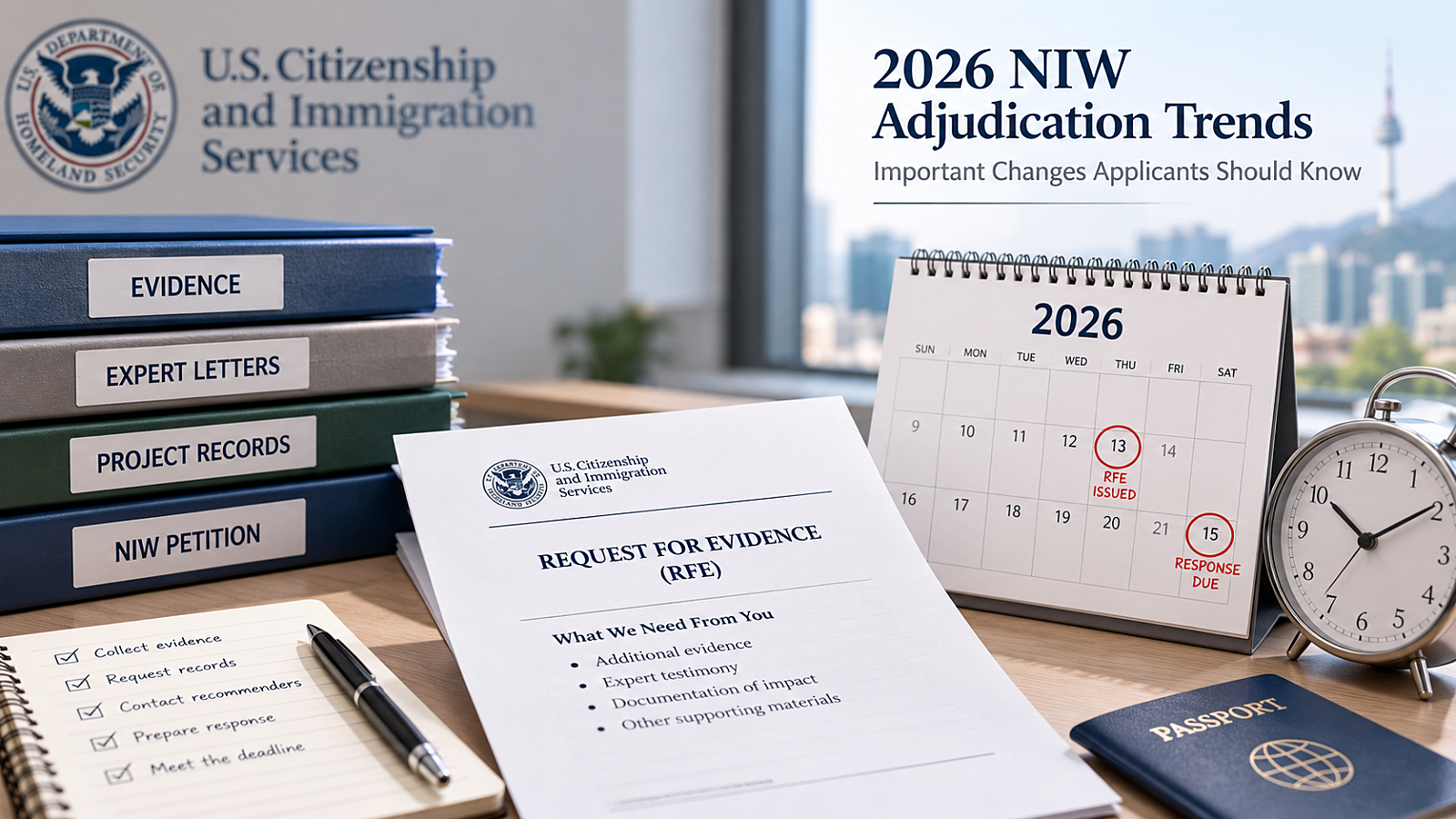
2026년 NIW 심사 동향: 신청자가 알아두어야 할 주요 변화
2026년 들어 NIW 심사에도 여러 변화가 이어지고 있습니다. 그중 최근 특히 주목해야 할 변화는 신청자의 케이스에 직접적인 영향을 줄 수 있는 추가서류요청(Request for Evidence, RFE) 답변기간입니다.
USCIS는 2026년 8월 5일 Policy Alert PA-2026-05를 발표하고, 증거자료와 RFE, 거절의향통지(Notice of Intent to Deny)에 관한 지침을 개정했습니다. 새로운 지침은 발표 즉시 시행되었으며, 8월 5일 당시 심사 중이거나 그 이후 접수된 케이스에 적용됩니다.
NIW 신청자라면 이번 RFE 답변기간의 변화를 특히 주의 깊게 살펴볼 필요가 있습니다.
■ RFE 답변기간 12주는 더 이상 일률적인 기준이 아닙니다
기존 USCIS 지침에서는 담당 심사관이 RFE를 발급할 경우 일반적으로 최대 답변기간인 12주를 부여하도록 하고 있었습니다.
이제는 달라졌습니다. 12주는 여전히 USCIS가 부여할 수 있는 최대 답변기간이지만, 더 이상 모든 RFE에 12주를 일률적으로 부여하는 방식은 아닙니다. 해당 케이스를 담당하는 USCIS 심사관이 이보다 짧은 답변기간을 정할 수 있습니다.
그렇다고 모든 RFE의 답변기간이 30일로 변경되었다는 의미는 아닙니다. 모든 케이스에 동일하게 적용되는 새로운 답변기간이 생긴 것이 아니라, 담당 USCIS 심사관의 판단에 따라 케이스별로 답변기간이 달라질 수 있습니다. 따라서 어떤 신청자는 다른 신청자보다 더 긴 답변기간을 받을 수도 있습니다.
미국 외 지역에 거주하는 신청자에게 중요한 변화가 하나 더 있습니다. 과거에는 해외로 우편 발송되는 통지서에 14일의 추가 기간을 부여했지만, 이 제도 역시 종료되었습니다. 새로운 지침에서는 관련 규정에서 인정하는 우편 발송에 따른 3일의 추가 기간만 적용됩니다.
■ 실제 NIW 케이스에서는 어떻게 달라지고 있을까?
이러한 정책 변화는 최근 실제 NIW 케이스에서도 확인되고 있습니다.
최근 저희가 검토한 한 NIW RFE는 2026년 8월 13일자로 발급되었고, USCIS가 답변서를 수령해야 하는 기한은 9월 15일이었습니다. RFE 발급일을 기준으로 불과 33일(달력일 기준)의 답변기간이 주어진 것입니다.
또 다른 RFE는 8월 17일자로 발급되었으며, 답변기한은 9월 21일이었습니다. 이 경우에도 주어진 기간은 35일(달력일 기준)에 불과했습니다.
두 신청자 모두 한국에 거주하고 있습니다.
여기서 중요한 것은 33일과 35일이 영업일이 아니라 달력일 기준이라는 점입니다. 주말도 답변기간에 포함됩니다. 또한 RFE에 기재된 기한은 답변서를 발송해야 하는 날짜가 아니라 USCIS가 답변서를 수령해야 하는 날짜입니다. 따라서 마감일까지 발송만 하면 된다고 생각해서는 안 됩니다.
물론 이 두 사례만으로 앞으로 모든 NIW RFE의 답변기간이 30~35일 정도로 정해진다고 볼 수는 없습니다. 실제로 얼마의 기간을 부여할지는 관련 규정이 정한 최대 기간 내에서 해당 케이스를 담당하는 USCIS 심사관이 결정합니다. 앞으로 발급되는 RFE에는 이보다 더 긴 기간이 주어질 수도 있습니다.
다만 최근 사례를 통해 분명히 알 수 있는 것은, 이제 RFE를 받으면 당연히 약 3개월의 준비기간이 주어질 것이라고 생각해서는 안 된다는 점입니다.
■ 짧아진 답변기한이 NIW에서 문제가 될 수 있는 이유
NIW는 기본적으로 많은 증빙자료를 필요로 하는 이민청원입니다. 따라서 NIW의 RFE는 단순히 누락된 서류 한두 가지를 추가로 제출하는 것으로 끝나지 않는 경우가 많습니다.
예를 들어 엔지니어의 경우 본인이 개발한 기술이 회사에서 실제로 적용되거나 활용되었다는 자료를 요구받을 수 있습니다. 그런데 사내 자료나 프로젝트 관련 정보를 USCIS에 제출하려면 먼저 회사의 승인을 받아야 하는 경우가 있습니다. 이러한 내부 승인 절차만으로도 상당한 시간이 소요될 수 있습니다.
추천서도 마찬가지입니다. 새로운 전문가 추천서가 필요하다면 먼저 적합한 전문가를 찾아 추천을 요청해야 합니다. 이후 추천인이 신청자의 연구나 업무를 이해하고 관련 자료를 검토한 뒤 실질적인 내용의 추천서를 작성하려면 어느 정도 시간이 필요합니다.
USCIS가 요구하는 증거가 기존 청원서를 준비할 당시 확보하지 않았던 자료일 수도 있습니다. 수년 전의 자료를 다시 찾아야 할 수도 있고, 과거 동료나 공동연구자에게 연락해야 할 수도 있습니다. 본인의 연구나 기술, 전문적인 성과가 실제로 다른 사람이나 기관에 어떻게 활용되었는지를 보여주는 새로운 자료를 찾아야 하는 경우도 있습니다.
약 12주의 시간이 주어졌을 때는 이러한 문제에 대응할 여유가 훨씬 많았습니다. 최근과 같이 답변기간이 짧아진 상황에서는 처음 일주일을 어떻게 보내느냐도 전체 RFE 준비에 영향을 줄 수 있습니다.
최근 NIW 심사에서 RFE가 매우 빈번하게 발생하고 있다는 점을 고려하면 이번 변화는 더욱 중요합니다. RFE를 받았다면 충분한 시간이 있을 것이라고 생각하기보다 가장 먼저 정확한 답변기한부터 확인해야 합니다.
■ 긍정적인 변화도 있습니다: RFE 내용이 보다 구체적으로 바뀌고 있습니다
최근 RFE를 검토하면서 한 가지 긍정적으로 보이는 변화도 있습니다.
지난 몇 년간 NIW RFE를 보면 상당한 분량의 일반적인 문구가 반복되는 경우가 많았습니다. National Importance나 Well Positioned가 입증되지 않았다는 결론은 나와 있지만, 그 이유를 설명하는 내용 중 상당 부분이 다른 RFE에서도 반복적으로 사용되는 정형화된 문구인 경우가 있었습니다. 그래서 담당 심사관이 해당 케이스에서 구체적으로 어떤 자료를 원하는지 파악하기 쉽지 않은 경우도 있었습니다.
최근 확인한 두 건의 RFE는 달랐습니다. 각 신청자의 케이스에 맞춰 어떤 부분이 부족하다고 판단했는지를 보다 구체적으로 설명했고, 여러 부분에서 심사관이 확인하고자 하는 구체적인 증거자료의 예시까지 제시했습니다. RFE를 읽고 나면 USCIS가 무엇을 문제 삼고 있으며, 답변에서 어떤 부분을 보완해야 하는지가 이전보다 훨씬 명확하게 보였습니다.
물론 이는 USCIS가 공식적으로 발표한 정책 변화가 아니라 최근 실제 케이스를 검토하면서 확인한 실무적인 변화입니다. 두 건의 RFE만으로 앞으로도 이러한 경향이 계속될 것이라고 단정할 수는 없습니다. 다만 최근 사례가 향후 심사 방향을 보여주는 것이라면 긍정적인 변화라고 볼 수 있습니다.
문제는 USCIS가 구체적으로 요구하는 자료 중에는 확보하는 데 상당한 시간이 필요한 자료도 있다는 점입니다. 심사관이 무엇을 원하는지 명확하게 알려주는 것은 도움이 되지만, 그렇다고 필요한 증거를 더 쉽거나 빠르게 확보할 수 있는 것은 아닙니다.
■ 앞으로 NIW 신청자가 알아두어야 할 점
8월 5일 정책 변경으로 NIW는 최초 청원서를 준비하는 단계와 RFE에 대응하는 단계 모두에서 철저한 준비가 더욱 중요해졌습니다.
처음 청원서를 접수할 때부터 당시 합리적으로 확보할 수 있는 가장 충실한 증거자료를 제출하는 것이 중요합니다. 같은 8월 5일 정책에 따라 USCIS 심사관은 일정한 경우 최초 제출 증거가 충분하지 않다고 판단하면 RFE나 거절의향통지(Notice of Intent to Deny)를 먼저 발급하지 않고 케이스를 거절할 수 있는 재량도 갖고 있습니다.
그리고 RFE를 받았다면 가장 먼저 확인해야 할 것은 답변기한입니다.
최근 한국 거주 신청자들의 사례가 그 이유를 잘 보여줍니다. 과거 거의 3개월에 가까운 준비기간에서 약 한 달의 준비기간으로 줄어들면 RFE에 대응하는 방식 자체가 달라질 수밖에 없습니다. 회사의 자료 제출 승인을 받아야 하거나 새로운 추천서를 준비해야 하는 경우, 또는 추가 증거를 새롭게 확보해야 한다면 생각보다 시간이 매우 빠듯할 수 있습니다.
---------------------------------
2026 NIW Adjudication Trends:
Important Changes Applicants Should Know
NIW adjudication has continued to change in 2026. One of the more important recent developments can have a real effect on an applicant’s case: the amount of time USCIS gives applicants to respond to a Request for Evidence (RFE).
On August 5, 2026, USCIS issued Policy Alert PA-2026-05, which updated its guidance on evidence, RFEs, and Notices of Intent to Deny. The new policy took effect immediately and applies to cases that were pending or filed on or after August 5.
For NIW applicants, the change in RFE response periods is worth paying close attention to.
■ The 12-Week RFE Period Is No Longer the Standard
Under the previous USCIS policy, officers were generally instructed to give applicants the maximum 12-week period to respond to an RFE.
That is no longer the case. Twelve weeks remains the maximum response period, but USCIS officers are no longer expected to give the full 12 weeks as the standard. The officer adjudicating the case can give a shorter response period.
This does not mean there is a new 30-day RFE rule. There is no single response period that applies to every case. The deadline is determined by the individual USCIS officer handling the case, and one applicant may receive more time than another.
There is another change that matters for applicants living outside the United States. Previously, USCIS provided an additional 14 days for notices mailed internationally. That practice has ended. Under the new guidance, only the three additional mailing days permitted under the applicable regulation are provided.
■ What We Are Already Seeing in NIW Cases
We are already seeing the effect of this change in actual NIW cases.
One recent RFE we reviewed was dated August 13, 2026. USCIS required the response to be received by September 15. That gave the applicant only 33 calendar days from the date of the RFE.
Another RFE was dated August 17, with a response deadline of September 21. That applicant was given 35 calendar days.
Both applicants reside in South Korea.
It is important to note that these are calendar days, not business days. Weekends count toward the response period. The deadline is also the date by which USCIS must receive the response. It is not enough to simply mail the response by that date.
These two cases do not mean that every NIW RFE will now come with a deadline of around 30 to 35 days. How much time is given is up to the USCIS officer adjudicating the case, within the maximum period allowed by regulation. Future RFEs may provide more time.
What these cases do tell us is that applicants can no longer safely assume that an RFE will come with approximately three months to prepare a response.
■ Why the Shorter Deadline is a Problem in an NIW Case
As a document heavy immigration petition category, NIW RFEs often require much more than submitting a missing document.
An engineer, for example, may need to provide evidence showing that his technology was implemented or used by his employer. Before submitting internal company records or information about a project, he may first need permission from the company. That process alone can take time.
Recommendation letters are another example. If a new expert letter is needed, the applicant first has to find the right person and ask for his or her assistance. The recommender then needs time to understand the applicant’s work and review the relevant materials before a meaningful letter can be prepared.
Sometimes the evidence USCIS requests was never collected in the first place. Applicants may have to go back through years of records or contact former colleagues and collaborators. In other cases, they may need to find new evidence showing how their research, technology, or professional work has actually been used by others.
With close to 12 weeks, there was much more room to deal with these issues. With the shorter time frame we are seeing, losing even a first week can make a difference.
This is especially important because RFEs have become very common in NIW cases. Anyone who receives one should look at the deadline immediately rather than assuming there will be plenty of time to respond.
■ One Positive Change: The RFEs Themselves Seem to Be Improving
There is another change we have noticed in recent cases, and this one is encouraging.
Over the past couple of years, many NIW RFEs contained a large amount of generic language. An officer might conclude that National Importance or Well Positioned had not been established, but much of the explanation consisted of standard language that appeared in many other RFEs. It was not always easy to tell exactly what the officer wanted to see.
The two recent RFEs discussed above were different. They were more specific to the individual case. The officers explained what they believed was missing and, in several places, gave examples of the exact evidence they wanted to see. After reading the RFE, it was much easier to understand what needed to be addressed in the response.
This is our observation from recent cases, not a USCIS policy announcement, and two RFEs are not enough to know whether this will continue. Still, if recent cases are an indication of where adjudication is heading, it is a positive development.
The challenge is that some of the evidence officers are now specifically asking for takes time to obtain. Knowing exactly what USCIS wants is helpful, but it does not necessarily make that evidence easier or faster to get.
■ What NIW Applicants Should Know Going Forward
The August 5 policy makes preparation more important at both stages of an NIW case.
The initial petition should contain the strongest evidence reasonably available at the time of filing. Under the same August 5 policy, USCIS officers also have discretion in certain circumstances to deny a case for insufficient initial evidence without first issuing an RFE or Notice Of Intent to Deny.
If an RFE does arrive, the first thing to check is the response deadline.
Recent cases involving applicants in Korea show why. Going from almost four months to about one month changes how an RFE response has to be handled. If company approval, a new recommendation letter, or additional supporting evidence is needed, there may be very little time to spare.

미국 변호사와 이민 전문가가 꼼꼼하게 검토 후 최적의 솔루션을 안내해 드립니다.
