 A U.S. permanent resident (Green Card Holder) can enjoy a variety of rights and opportunities within the United States, but differences from citizens still remain. One area many people are especially curious about is military service and government jobs. This column will examine in detail the job categories a permanent resident can apply for, as well as those positions reserved exclusively for citizens.
1. Whether Permanent Residents Can Serve in the Military
A U.S. permanent resident (Green Card Holder) can enjoy a variety of rights and opportunities within the United States, but differences from citizens still remain. One area many people are especially curious about is military service and government jobs. This column will examine in detail the job categories a permanent resident can apply for, as well as those positions reserved exclusively for citizens.
1. Whether Permanent Residents Can Serve in the Military
(1) Eligibility of Permanent Residents to Enlist in the U.S. Military
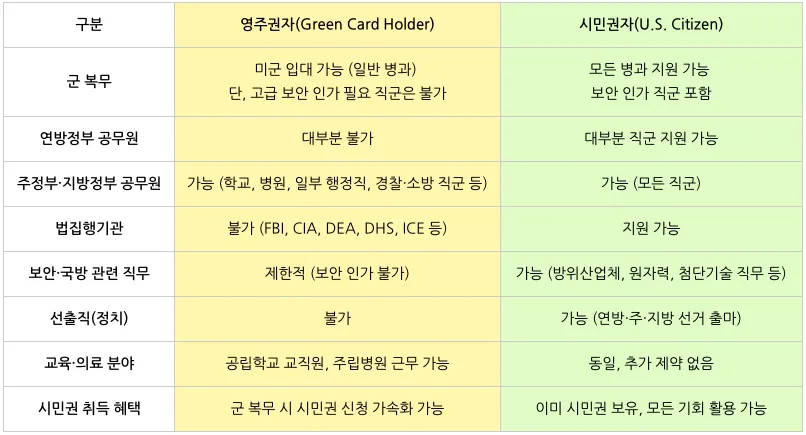
A permanent resident can legally apply to the U.S. military (Army, Navy, Air Force, Marine Corps, Coast Guard). Under U.S. immigration law, a person holding lawful permanent residency is guaranteed the opportunity to serve in the military as a member of American society, and in fact many immigrants have served in the U.S. armed forces.
(2) Restricted Positions
However, not all positions are open. Some roles require Security Clearance, particularly Top Secret Clearance, which only citizens can apply for. As a result, permanent residents cannot apply to departments directly tied to national security, such as advanced weapons systems, intelligence analysis, and nuclear-related fields.
(3) Connection to Obtaining Citizenship
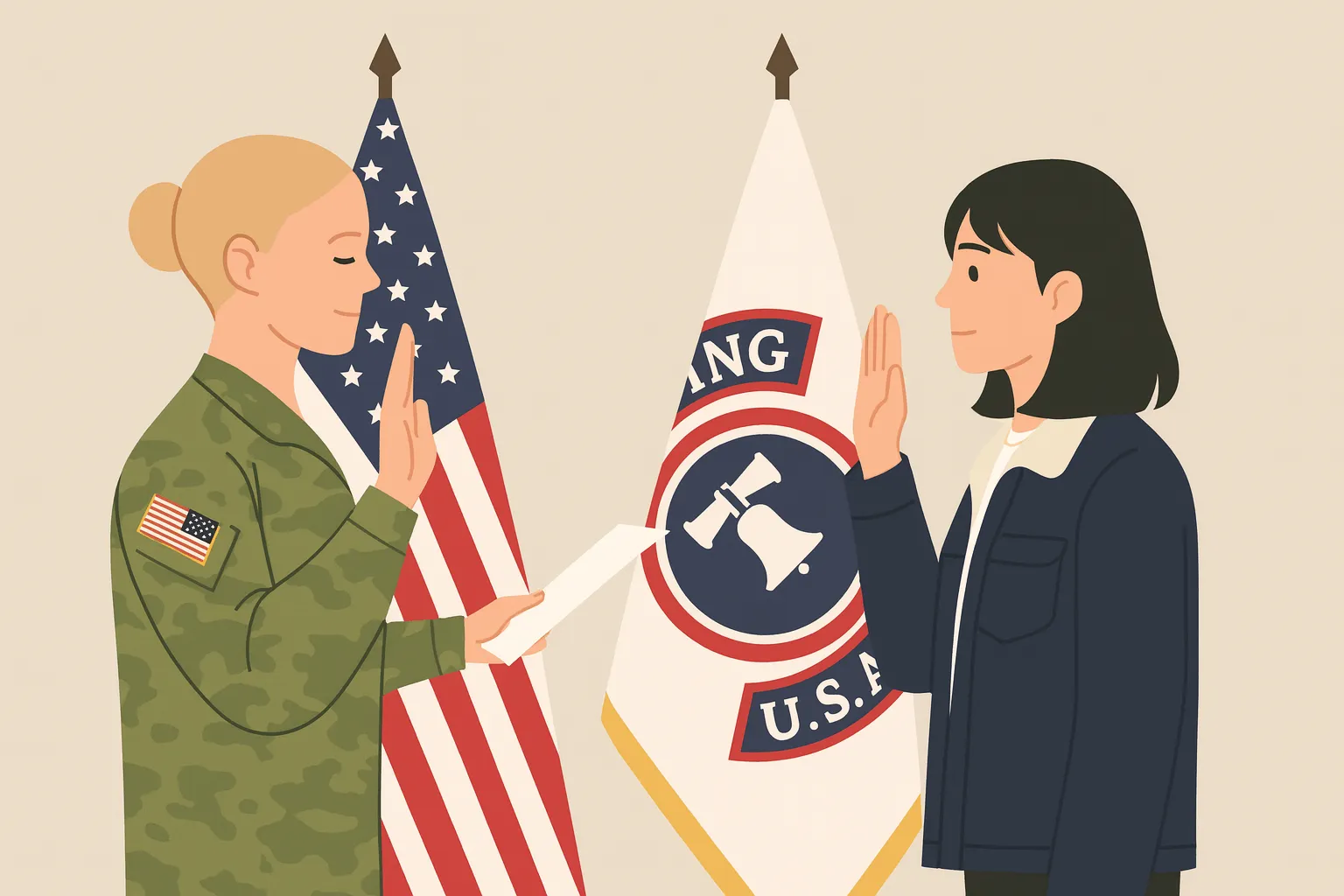
There are special provisions that can speed up citizenship applications when a permanent resident enlists in the U.S. military. Sections INA 328 and INA 329 of U.S. immigration law provide special naturalization procedures for military service members, and in the case of wartime service, eligibility to apply for citizenship may be granted regardless of length of service. This shows that military service can be more than just a job for a permanent resident — it can serve as a shortcut to U.S. citizenship.
2. Whether Permanent Residents Can Work as Government Employees
(1) Positions That Are Available
Permanent residents can also apply for a considerable number of public positions at the state and local government level. For example:
- Public school teaching and administrative staff
- Employment at state universities and state hospitals
- Some police and fire department positions (varies by state regulation)
- Local administrative office positions such as city hall or county offices
This is possible because American society recognizes permanent residents as stable, lawful long-term residents.
(2) Restricted Positions
Conversely, permanent residents cannot apply for most Federal Government positions. In particular, major agencies related to national security, diplomacy, law enforcement, and intelligence specify citizenship as a hiring requirement.
- Federal investigative and intelligence agencies such as the FBI, CIA, DEA, DHS, and ICE
- Major executive departments such as the Department of State and Department of Defense
- Positions related to federal courts and federal prosecution
These restrictions exist because the United States prioritizes citizens for reasons of national security and confidentiality.
3. Representative Positions Open Only to Citizens
To clarify the differences from permanent residents, the representative positions open only to citizens are summarized below.
- Federal government employees: Citizenship is required for most positions
- Law enforcement agencies: FBI, CIA, Secret Service, Homeland Security, and others
- Security-related work: Defense contractors, nuclear energy, and advanced defense-related technology fields
- Elected office: Citizenship is required to run as a candidate in federal, state, or local elections
In addition to these, certain officer positions within the military and senior diplomatic positions also require citizenship.
4. Strategic Implications
If a permanent resident wants to broaden their range of job options within the United States, the following strategies can be considered.
Accelerating citizenship through military service
→ Since a permanent resident who serves in the U.S. military can receive special naturalization benefits, this becomes a highly effective path for those considering citizenship in the long term.
Considering conversion to citizenship after working for state or local government
→ A strategy is possible in which one first takes a position available under permanent resident status (schools, hospitals, administration, etc.), then obtains citizenship and moves into a federal government position.
Reassessing the need to obtain citizenship
→ If planning a stable long-term career, particularly in government, military, or law enforcement fields, obtaining citizenship is effectively an essential step. Unlike permanent residency, which is intended simply for staying in the country, citizenship provides the right to participate in the core areas of American society.
5. Permanent Residency Is the Beginning of Opportunity
A permanent resident can apply for military service and some state and local government positions, but positions related to the federal government and national security are open only to citizens. Therefore, if planning a stable long-term public service or military career in the United States, it is advantageous to actively consider obtaining citizenship.
In other words, permanent residency opens the door to opportunity, but citizenship allows you to pass completely through that door
6. Comparison Table of Job Options for Permanent Residents and Citizens