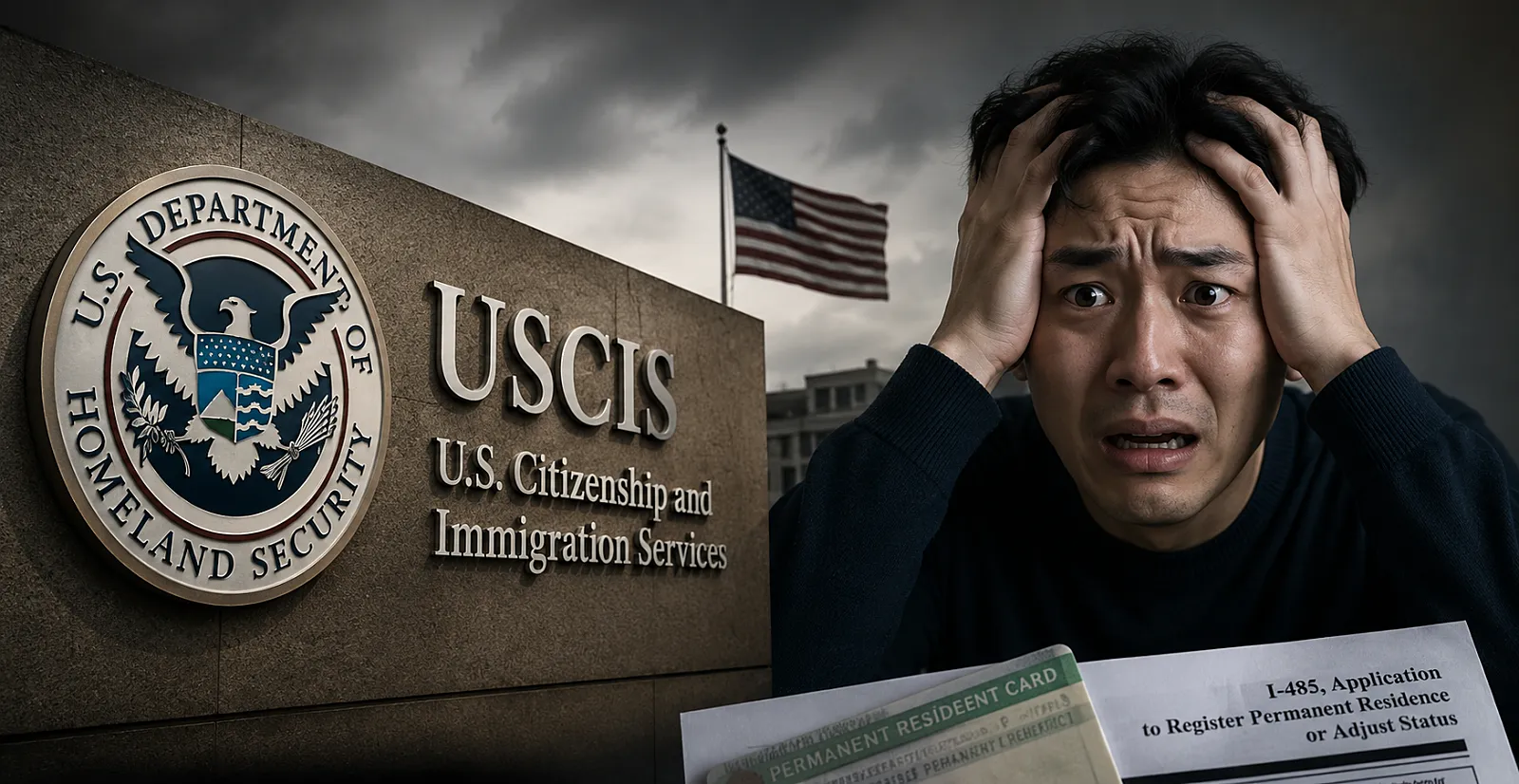
 Recent USCIS Policy Changes and Strategies
for Preparing for Employment-Based Immigration
Recent USCIS Policy Changes and Strategies
for Preparing for Employment-Based Immigration
Recent articles and online discussions about U.S. immigration have seen claims such as “It’s now becoming harder to apply for a green card from within the U.S.” and “In the future, everyone will have to return to their home country to attend their green card interview” spreading rapidly. In particular, anxiety is growing among students studying in the U.S., professionals working on employment visas, and those preparing for employment-based immigration.
However, when policy changes occur, the greatest danger lies neither in excessive optimism nor in excessive fear. It is important to calmly assess what changes have actually occurred, how they affect your specific situation, and what you need to prepare for right now.
In this column, I will summarize what the recent controversial shifts in USCIS policy direction mean and outline the strategies clients currently preparing for employment-based immigration should adopt.
■ What WasAdjustment of Status (AOS) Originally?
There are two main ways to obtain U.S. permanent residency.
The first is Adjustment of Status (AOS), which involves changing one’s status to that of a permanent resident while in the United States. The I-485 application process is a prime example of this.
The second is Consular Processing (CP), in which the permanent residency process is carried out through an interview at a U.S. embassy or consulate outside the United States.
For example, if someone who was studying in the U.S. on an F-1 student visa or working on an H-1B work visa files Form I-485 while in the U.S., this is considered Adjustment of Status. Conversely, if that person returns to South Korea and undergoes an interview at the U.S. Embassy in Seoul, this is considered Consular Processing.
For a long time, many applicants have preferred Adjustment of Status within the U.S. This is because it allows them to continue living and working in the U.S., and after a certain point, they can obtain an Employment Authorization Document (EAD) and an Advance Permission (AP) to travel. The ability to prepare for permanent residency while maintaining their family’s lifestyle has also been considered a major advantage.
■ What DoRecent USCIS Policy Changes Mean?
The crux of the recent controversy is not that the path to permanent residency itself has been blocked.
Rather, it lies in the fact that the government has begun to reemphasize that “adjustment of status within the United States is not an automatically granted right, but a process subject to the discretion of the executive branch.”
In fact, this is not an entirely new legal concept. Under U.S. immigration law, it has long been the case that meeting certain requirements does not automatically guarantee approval of adjustment of status.
However, in practice, the process has generally proceeded in a relatively predictable manner for those who meet the eligibility criteria.
The direction of recent discussions suggests that adjudicators may more actively review an applicant’s history of stay, purpose of entry, and necessity of staying in the United States.
In other words, interpreting this to mean that “applications for permanent residency within the United States will be completely banned going forward” may be an overreach based on current standards.
On the other hand, the interpretation that “the reasons and circumstances for applying for permanent residency within the U.S. will be scrutinized more strictly” is a perfectly realistic scenario.
■ NotAll Visa Holders Will Be Affected Equally
Based on recent inquiries, one of the most frequently asked questions is, “So, is it risky to apply for permanent residency with my current visa?” The answer is not as straightforward as one might think.
In the case of the F-1 student visa, entry is, in principle, based on the premise of non-immigrant intent. Therefore, if you begin the green card process immediately upon entry or if your continued enrollment is unclear, you may be subject to additional scrutiny.
However, this does not mean that the structure itself—where you proceed normally with your studies and subsequently transition to employment-based immigration through work or research activities—will disappear.
With tourist visas (B-1/B-2), you need to be relatively more cautious. This is because it can become an issue if there is a significant discrepancy between the initial purpose of entry and subsequent actions.
In contrast, the H-1B and L-1 visas are structurally in a relatively stable position.
These two visas are classified as typical “dual intent” visas and have institutional characteristics that simultaneously recognize both the intention to stay in the U.S. and long-term plans for permanent residency.
■ What Should Employment-Based Immigrant Visa Applicants Prepare Now?
The most important consideration right now is not simply “whether or not it can be done from within the U.S.” Rather, it is how strategically you design your case.
First, you must maintain your current status securely.
Going forward, the process itself is likely to be evaluated more heavily than the mere outcome. You need to manage basic elements—such as maintaining your academic status, holding lawful employment, filing tax returns, and keeping track of your immigration records—more thoroughly.
Second, it is advisable not to base your plans solely on Adjustment of Status (AOS).
There are two pathways for employment-based immigration: adjustment of status within the U.S. and consular processing. Rather than assuming only one path is viable, it is safer to prepare a “Plan B” that allows you to switch depending on the situation.
Third, the timing of your application can be critical.
You must design your filing schedule by comprehensively considering your priority date, visa bulletin, immigration status, and employment stability.
■ What’s Needed Now Is Preparation, Not Fear
Immigration policies are constantly changing.
Every time there is a change in administration or a shift in the executive branch’s direction, the review criteria have also been adjusted. However, in reality, the outcome is far more often determined by how well-prepared the applicant is than by the system itself.
In particular, employment-based immigration is not a process that can be completed in a short period of time.
Regardless of the category—EB-2, EB-3, NIW, or conversion to permanent residency after an E-2 visa—what ultimately matters is comprehensively planning your current status, family situation, career plans, and filing strategy.
Recent changes are certainly not an issue to be taken lightly. However, what is needed at this stage is not to conclude that “the path to permanent residency in the U.S. is over,” but rather to reassess the strategy that best fits your individual circumstances.
Policies may change, but options still exist for those who are prepared.