In-depth analysis from U.S. attorneys and immigration specialists.
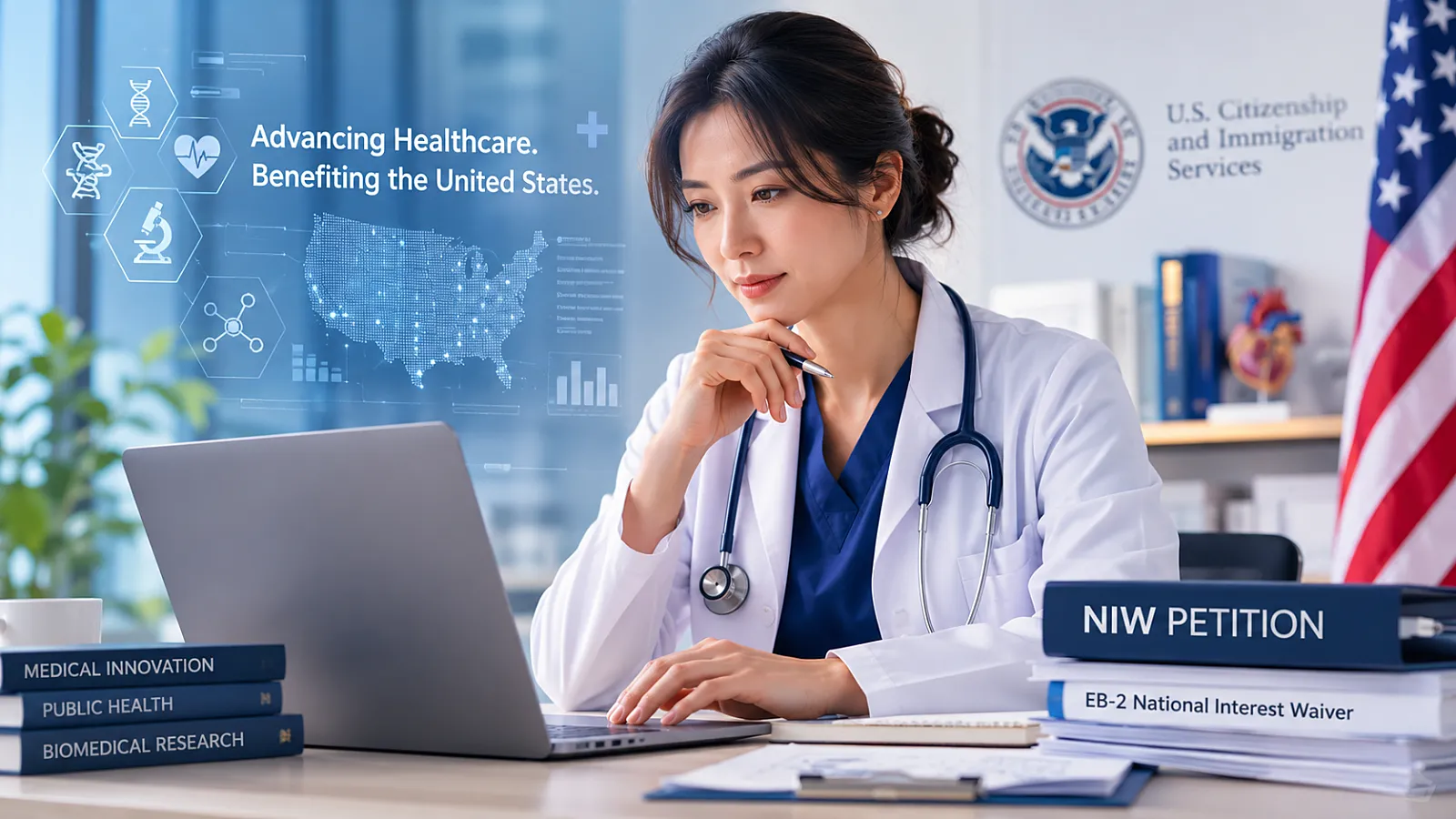
Why Healthcare Is One of the Strongest Fields for an NIW Petition
People often ask whether certain professions have an advantage under the EB-2 National Interest Waiver (NIW). It’s an understandable question. After all, many approved NIW cases involve physicians, biomedical researchers, medical device developers, public health professionals, or others whose work is connected to healthcare.
The answer, however, is not that USCIS simply favors the medical field.
Some proposed endeavors are simply easier for USCIS adjudicators to understand than others. Healthcare falls into that category—not because of the job title itself, but because the importance of the work is usually apparent from the outset. The challenge in an NIW petition is not convincing USCIS that healthcare matters. The United States has already reached that conclusion. The purpose of the petition is to explain how the applicant’s work fits into that much larger picture.
■ Viewing the Petition from USCIS’s Perspective
When people think about an NIW petition, they often focus on the applicant’s credentials. They ask whether the applicant has enough publications, citations, experience, or awards. While these are all important elements of the case, they are not where the analysis begins.
Before an adjudicating officer considers whether an applicant is well-positioned to carry out a proposed endeavor, there is a more fundamental question that must be answered: Why does this work matter to the United States? That question lies at the heart of every NIW petition. Some endeavors answer it almost immediately. Others require a much more detailed explanation before their broader significance becomes clear.
Healthcare has an advantage because most people—including the adjudicating officer—already understand why advances in medicine are valuable. Whether the work involves developing a better medical device, improving diagnostic accuracy, advancing cancer treatment, designing safer surgical technologies, or improving healthcare delivery, the broader benefit is not difficult to recognize. The officer is not being introduced to a new national priority. They are reviewing an endeavor that already aligns with one.
■ Why Healthcare Is Different
This does not mean healthcare is the only field eligible for an NIW. Some of the strongest petitions we have prepared have involved engineering, manufacturing, environmental protection, energy, and other industries that have nothing to do with medicine. The difference is that many of those cases require additional explanation before the national benefit becomes obvious.
Take, for example, someone developing software that helps a private company manage its internal operations more efficiently. There may be real value in that work, but an adjudicator may need several more steps before concluding that the endeavor benefits the United States as a whole rather than primarily benefiting a single employer. That broader connection can certainly be made, but it usually requires further explanation.
Healthcare often starts from a different place. If an applicant is working on a medical device that improves patient outcomes, reduces complications, or makes an existing treatment safer, the broader public benefit is immediately apparent. The same is true for work involving disease prevention, diagnostics, rehabilitation technologies, or other medical innovations. Even without technical expertise, an adjudicator can readily appreciate why improvements in these areas have significance beyond a single hospital, company, or patient.
■ A Misconception About Healthcare NIW Cases
One explanation comes up repeatedly whenever healthcare NIW cases are discussed: America has a shortage of healthcare workers. While that observation may be true in many parts of the country, it is not, by itself, what makes a healthcare NIW case compelling.
There is an important reason for this. The employment-based immigration system already includes a mechanism for addressing labor shortages. In most employment-based cases, employers complete the labor certification process to demonstrate that qualified U.S. workers are unavailable for a particular position. That process exists for a reason. If a petition relies on the argument that the country needs more workers in a particular occupation, it begins to sound less like an NIW case and more like a traditional labor certification case.
This is why healthcare petitions are usually strongest when they move beyond workforce shortages and focus instead on the work itself. The question is no longer whether another healthcare professional is needed to fill a vacancy. The more important question is whether the applicant’s proposed endeavor contributes to improving healthcare in a way that carries broader significance. These are two very different concepts, and they should not be confused.
■ Why Officers Often Understand Healthcare Endeavors So Quickly
Imagine an officer reviewing two petitions on the same afternoon. One applicant is developing a medical device intended to improve the treatment of cardiovascular disease. Another has created software that helps private businesses streamline internal administrative functions. Both applicants may be highly accomplished. Both may have advanced degrees, years of experience, and impressive professional achievements.
The difference does not lie in the applicants’ intelligence or the quality of their credentials. The difference lies in how naturally the proposed endeavor aligns with the public interest. Advances in medical treatment have consequences that extend far beyond the company developing the technology. Better treatment options can improve patient outcomes, reduce long-term healthcare costs, and strengthen the healthcare system itself. These broader implications are relatively easy for an adjudicator to recognize because they are already consistent with priorities that have existed for many years.
That does not mean every healthcare petition deserves approval. Every applicant must still meet the legal requirements of the NIW. What healthcare often provides is a clearer starting point. The connection between the endeavor and the interests of the United States is frequently easier to understand than it is in many other industries.
■ Final Thoughts
One of the biggest misconceptions about the NIW is that success depends primarily on having the “right” profession. In reality, the profession is only part of the story. What matters is whether the proposed endeavor can be understood as work that benefits the United States on a broader level.
Healthcare happens to lend itself to that discussion more naturally than many other fields. The value of improving medical treatments, advancing healthcare technology, or making healthcare systems more effective rarely requires much persuasion. That does not eliminate the need for a carefully prepared petition, nor does it guarantee approval. It simply means that healthcare-related endeavors often start with an advantage: the immigration officer already understands why the problem is worth solving.

U.S. attorneys and immigration specialists review your case in detail and recommend the best path forward.
